Choosing the top China Adult Diaper Vendor requires more than comparing prices or factory photographs. Global buyers need evidence of product consistency, material safety, production capacity, and responsible communication. A reliable supplier should explain absorbency performance, leakage protection, skin-contact materials, packaging options, and quality-control procedures clearly.
As Professor Paul Abrams has noted, “Urinary incontinence is a symptom, not a disease.” This reminder matters when evaluating adult care products. A professional Adult Diaper Vendor should understand different users, including seniors, patients with limited mobility, and people managing daily incontinence. Product details should reflect real use: a soft inner layer, secure adhesive tabs, breathable side panels, and sizing that does not press painfully against the waist.
Factory experience also deserves close attention. Buyers should request recent test reports, sample batches, production photos, and references from comparable markets. A supplier that answers quickly is useful. A supplier that answers precisely is better. Still, no vendor should be trusted only because its website looks polished.
Some claims need questioning.
Even experienced buyers can overlook small problems, such as inconsistent absorbency between batches or cartons damaged by humidity. Therefore, the best China Adult Diaper Vendor is not simply the cheapest manufacturer. It is a transparent partner that documents performance, respects user dignity, and supports stable long-term supply. Careful evaluation may take more time, but it reduces costly surprises after shipment.
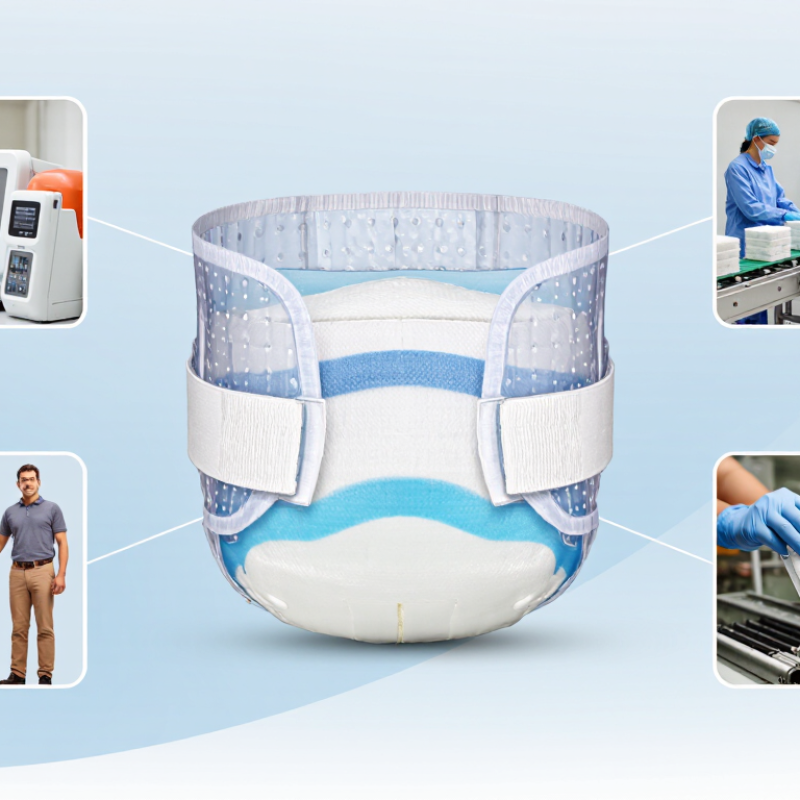
Top China Adult Diaper Vendor for Global Buyers?
China’s adult diaper supply market has become an important part of global absorbent-care manufacturing. Factories serve hospitals, care homes, retailers, and distributors across many regions. Their export role depends on stable production, practical design, and dependable shipping. Experienced suppliers usually offer different absorbency levels, breathable backsheets, adjustable tabs, and size ranges for varied body shapes. However, product quality can differ sharply between factories. A polished sample does not always represent regular production.
Global buyers should examine raw material records, factory capacity, inspection procedures, and packaging strength. Independent testing can verify absorbency, leakage resistance, skin-contact safety, and sizing accuracy. Buyers also need clear documentation for their destination markets. Requirements may cover labeling, import records, hygiene claims, and product materials. A low quote can hide weak consistency or costly delivery delays. That risk deserves attention.
Tips: Request samples from several production batches, not one carton only. Check whether the core remains stable after repeated wetting. Ask for inspection photos before shipment. Confirm carton measurements and moisture protection. Keep written specifications for every order. No supplier is perfect. Even experienced buyers should review complaints, returns, and changing regulations instead of trusting old assumptions.
China’s Adult Diaper Supply Market and Its Global Role
China’s population aged 60 and above increased from approximately 254 million in 2019 to 297 million in 2023. This demographic expansion is a long-term demand driver for adult diapers, incontinence care products, and related healthcare supplies, supporting China’s role as a major manufacturing and export base for global buyers.
Source: National Bureau of Statistics of China, annual statistical communiqués. Figures represent the population aged 60 and above.
Global demand is rising with population ageing and greater continence-care awareness. The UN World Social Report 2023 counted 761 million people aged 65 and above in 2021. It projects this figure to reach 1.6 billion by 2050. Grand View Research estimated the global adult diaper market at approximately USD 16.1 billion in 2023. These figures show opportunity, not supplier quality. Market size alone proves little.
A reliable Chinese vendor should provide traceable raw-material records and consistent production controls. Request test results for absorption, rewet, leakage, tensile strength, and skin-contact safety. Testing should follow recognized EDANA or INDA methods where applicable. Ask for batch records, retention samples, and corrective-action reports. ISO 9001 certification can support quality management, but it does not replace an independent factory audit. Check production capacity, hygiene controls, worker training, and equipment maintenance in person or remotely.
Commercial discipline matters too. Confirm minimum order quantities, sampling timelines, carton dimensions, loading plans, and replenishment lead times. A polished sample can still hide weak supply performance. Ask for evidence from recent export orders, not only presentation files. Packaging should protect products from moisture and compression during long-distance transport. Communication must be precise about sizes, absorbency levels, materials, and labeling rules. Some buyers overvalue low pricing. That is understandable, but it can create higher costs through returns, delays, and inconsistent batches. Supplier selection should remain evidence-based, even when the first sample looks excellent.
Top China Adult Diaper Vendor for Global Buyers?
A reliable Chinese supplier should offer more than low pricing. Product choice matters. Adult pull-up pants suit active users, while tab-style briefs support assisted changing. Underpads protect beds, chairs, and examination surfaces. The United Nations World Social Report 2023 projects that one in six people worldwide will be aged 60 or older by 2030. This demographic shift increases demand for discreet, skin-friendly protection.
Material selection affects comfort and performance. A typical core combines fluff pulp with superabsorbent polymer, while soft nonwoven fabric reduces friction. Breathable polyethylene film can limit leakage while supporting airflow. The supplier should provide SAP content, core weight, acquisition time, and rewet results. ISO 11948-1 offers a recognized method for measuring absorbency. Fortune Business Insights estimated the global adult diapers market at about USD 15.79 billion in 2023, showing why buyers need measurable specifications, not vague claims.
Customization may include waist sizes, absorbency levels, core shapes, adhesive systems, printed packaging, and multilingual labels. Trial samples should match production materials. A white sample can hide real differences. Buyers should request batch testing, carton dimensions, shelf-life data, and factory quality records. Private-label packaging is useful, but artwork errors remain possible. I have seen buyers focus on logos while ignoring fit and rewet performance. That choice can become expensive. A practical vendor earns trust through transparent sampling, stable lead times, and documented inspection results.
| Product Type | Typical Use | Common Size Range | Core Absorbency Range | Main Materials | Key Construction Features | Customization Options for Global Buyers |
|---|---|---|---|---|---|---|
| Adult Tab-Style Brief | Moderate to heavy incontinence; suitable for users requiring frequent changes or caregiver assistance. | Waist or hip circumference commonly from approximately 60 to 180 cm, depending on the size system. | Approx. 800–3,500 mL* | Soft nonwoven top sheet, absorbent fluff pulp, superabsorbent polymer, tissue or acquisition layer, polyethylene or breathable backsheet. | Refastenable side tabs, elastic leg cuffs, standing leak guards, wetness indicator, contoured core. | Size grading, absorbency level, tab material, backsheet color, wetness-indicator layout, printed packaging, carton quantity, private-label artwork. |
| Adult Pull-Up Protective Underwear | Light to moderate leakage; designed for active users who can pull the product on independently. | Commonly available for waist or hip circumferences of approximately 60 to 160 cm. | Approx. 500–2,000 mL* | Elastic nonwoven waist, soft nonwoven topsheet, absorbent pulp and SAP core, breathable polyethylene film or breathable laminate. | 360-degree stretch waistband, tear-away side seams, elastic leg gathers, slim-fitting core, odor-control or pH-neutral options. | Waistband elasticity, leg-opening design, core thickness, absorbency target, side-seam strength, packaging language, unit count per bag. |
| Adult Belted Undergarment | Moderate incontinence and situations requiring easy fitting with adjustable side belts. | Usually offered in several sizes covering approximately 70 to 170 cm at the waist or hips. | Approx. 700–2,500 mL* | Nonwoven belt, absorbent pulp and SAP core, soft topsheet, leak-resistant backsheet, elastic leg components. | Adjustable reusable belt, open or closed core design, refastenable tabs, flexible leg elastics, caregiver-friendly fitting. | Belt width, fastening method, core dimensions, breathable-film selection, absorbency distribution, color coding by size. |
| Heavy-Absorbency Adult Brief | Overnight use, extended wear, bed care, and heavy urinary incontinence. | Typically available in multiple sizes from small through extra-large or larger, subject to the supplier’s size chart. | Approx. 1,500–4,000 mL* | High-loft acquisition layer, fluff pulp, SAP, reinforced tissue, breathable backsheet, soft hydrophilic topsheet. | High-capacity multi-layer core, wide leak guards, reinforced side panels, strong refastenable tabs, wetness indicator. | SAP-to-pulp ratio, core profile, absorbency zoning, compression resistance, overnight version, larger-size engineering. |
| Light-Absorbency Liner or Booster Pad | Light leakage or use together with reusable underwear, briefs, or other containment products. | Commonly supplied in short, regular, and long lengths rather than full waist sizes. | Approx. 150–900 mL* | Nonwoven topsheet, fluff pulp and SAP core, moisture-resistant backsheet, optional adhesive strips. | Contoured shape, adhesive positioning strip, raised side channels, thin profile, optional breathable backing. | Length and width, adhesive strength, absorbency level, individually wrapped format, perforated packaging, packaging language. |
| Reusable Washable Adult Brief | Light to moderate leakage, supplemental protection, and buyers seeking a reusable textile option. | Often sized by waist or hip circumference, commonly from approximately 60 to 150 cm. | Approx. 300–1,200 mL* | Polyester or cotton-blend outer fabric, absorbent microfiber or bamboo-blend layers, waterproof TPU or PUL barrier. | Washable construction, elastic leg openings, sewn-in or removable absorbent insert, snap or hook-and-loop closure options. | Fabric composition, number of absorbent layers, insert design, closure system, color, size grading, care-label language. |
| Underpad / Bed Protection Pad | Protection for beds, chairs, wheelchairs, examination tables, and other furniture surfaces. | Common sizes include approximately 60 × 60 cm, 60 × 90 cm, and 80 × 90 cm; other dimensions can be produced. | Approx. 500–2,500 mL* | Nonwoven top sheet, fluff pulp and SAP core, tissue wrap, polyethylene or breathable waterproof backing. | Quilted or channelled core, sealed edges, waterproof backing, optional tuck-in flaps, disposable or washable formats. | Dimensions, absorbency, backing type, quilting pattern, edge sealing, reusable fabric, individual wrapping, case pack. |
Global buyers need more than a competitive adult diaper quotation. Grand View Research valued the global adult diapers market at approximately USD 20.63 billion in 2023. That scale increases pressure on supplier verification. A reliable factory should document pulp, nonwoven, elastic, and adhesive specifications before production. Incoming materials need lot-based inspection. Finished products should undergo absorbency, rewet, leakage, tensile strength, and microbiological testing. Small details matter. A loose waistband can create costly claims.
ISO 9001 certification supports controlled processes, but it does not prove product performance. Buyers should review the certificate scope, audit date, factory address, and corrective-action records. OEKO-TEX Standard 100 or equivalent textile safety evidence may support skin-contact risk assessment. However, certification alone is not enough. A 2024 market report from Smithers identified hygiene applications as a major driver of nonwoven demand, making traceability increasingly important. Suppliers should retain test reports, batch codes, production records, and retained samples.
Export compliance depends on the destination country and product claims. Adult diapers marketed for general hygiene may follow different rules from products claiming medical treatment. Confirm the correct HS classification, labeling language, fiber content, country of origin, packaging rules, and chemical restrictions. European shipments may require checks against REACH obligations. U.S. requirements can differ. Importers should verify them independently. A perfect audit file is still not enough. Factories sometimes overlook carton humidity, translation errors, or changing raw-material sources. Regular third-party testing and shipment inspections reduce that risk, though they cannot replace careful buyer judgment.
Pricing should be compared by usable performance, not carton price alone. Grand View Research estimates the global adult incontinence products market will grow at about 6–7% annually toward 2030. That growth attracts factories with very different standards. Ask for absorbency test results, core materials, size charts, packaging specifications, and a complete FOB or CIF quotation. A practical comparison includes sample cost, tooling fees, payment terms, and replacement rules for defective goods. Low pricing can mislead.
Minimum orders often depend on diaper size, absorbency level, packaging design, and private-label printing. Many suppliers offer lower MOQs for standard packaging, but custom bags may require several thousand units per design. Request a tiered quote for one, three, and five containers. Then calculate the landed cost per piece. It exposes hidden expenses. Sometimes, I would still choose a higher unit price for better inspection records and stable production.
Logistics needs equal attention. The World Bank’s Logistics Performance Index 2023 indicates international shipments can take about 44 days from export warehouse to destination, with delays concentrated in handling and border processes. Confirm carton dimensions, container loading plans, HS classification, Incoterms, insurance, and destination documents before ordering. Buyer support should include pre-shipment inspection, batch photos, loading videos, and a named response contact. These controls are useful, but not perfect. A video cannot replace independent testing. Availability of spare packaging and fast complaint handling often matters more than a polished sales presentation.
China supplies hospitals, care homes, retailers, and distributors across many regions. Factories offer varied absorbency, adjustable tabs, breathable backsheets, and multiple sizes. Shipping stability matters. Quality still varies between factories.
Request samples from several production batches, not one carton. Compare absorbency, leakage resistance, sizing, waistband strength, and packaging quality. A polished sample may not reflect normal production. That risk matters.
Review raw-material specifications, production capacity, inspection procedures, and batch records. Check pulp, nonwoven fabric, elastic, and adhesive details. Ask for corrective-action records and retained samples. Old paperwork may hide current problems.
Test absorbency, rewet, leakage resistance, tensile strength, microbiological safety, and sizing accuracy. Repeat wetting can reveal core movement or weak absorption. A loose waistband can cause complaints. Small details matter.
No certificate proves every shipment will perform perfectly. Check the certificate scope, audit date, factory address, and related test evidence. Independent testing adds useful protection. It cannot replace judgment.
Confirm the correct product classification, labeling language, material information, origin statement, and packaging rules. Requirements differ by destination country. Claims about medical treatment may create additional obligations. Verify everything independently.
Confirm carton measurements, stacking strength, sealing quality, and moisture protection. Request inspection photos before shipment. Check whether cartons remain dry during storage and transport. Delivery delays can erase a low quotation’s advantage.
Review complaints, returns, batch codes, and production changes after every shipment. Compare received products with approved samples and written specifications. Keep records of changing raw materials. No supplier is perfect.
China has become an important source of adult incontinence products for global buyers, offering broad production capacity, competitive pricing, and flexible manufacturing services. However, choosing a top Adult Diaper Vendor requires more than comparing quotations. Buyers should evaluate product types, raw materials, absorbency performance, sizing, comfort, packaging, and customization options to ensure the products match their target market and customer needs.
A reliable supplier should also demonstrate consistent quality control, suitable certifications, traceable production processes, and experience with export documentation and compliance requirements. Other essential considerations include minimum order quantities, pricing transparency, production lead times, shipping arrangements, and responsive buyer support. By assessing these factors together, importers, distributors, and private-label businesses can identify a dependable Chinese manufacturing partner that offers stable quality, practical customization, efficient logistics, and long-term cooperation potential.

Wholesome