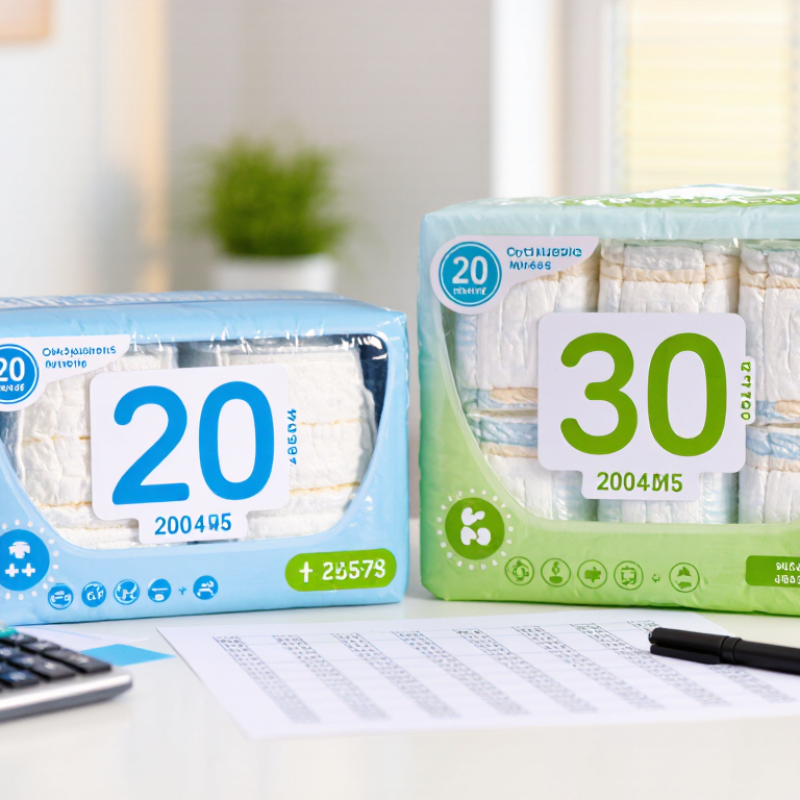
Finding a fair Adult Diaper Price can be harder than comparing two package labels. A pack of 20 may look cheaper than one of 30, but the cost per diaper can tell a different story. Prices also shift with absorbency, size, brand, order volume, and delivery fees. Small details matter.
This guide explores seven practical ways to compare prices across countries and sellers. It looks beyond the shelf price to shipping, taxes, currency conversion, bulk discounts, and subscription terms. A low unit price is useful only when the product fits the wearer’s needs and arrives reliably. Check the absorbency level and waist measurements on the package, not just the product name. If a product causes discomfort or does not manage leakage, the apparent savings may not be worth it. Individual needs vary.
Worldwide comparisons need care. Retail listings may use different currencies, pack sizes, and delivery estimates, so record the final checkout total and compare equivalent products. Seller information, clear return policies, and current stock details can help you judge whether a deal is dependable. Prices can change quickly. The tips ahead offer a grounded way to shop with less guesswork, while recognizing that one method will not suit every household. A small spreadsheet may help, though honestly, keeping every listing updated can become tedious.
Understanding Adult Diaper Prices Across Global Markets
Adult diaper prices can differ sharply between countries, even when packages look similar. Local production may reduce freight costs, while imported products can become more expensive after shipping, customs charges, and currency changes. Retail prices may also reflect local wages, storage costs, and sales taxes.
Compare the cost per diaper, not just the package price. A pack of 20 may seem cheaper than one of 30, but the unit cost could be higher. Check the size and absorbency level, too. A heavier overnight product may cost more than a light daytime option, and a poor fit can lead to leaks and wasted supplies. Small details matter.
Availability affects prices as well. In a city with several pharmacies and online sellers, shoppers may find more options than in a remote area with limited deliveries. Still, the lowest listed price is not always the best deal. Delivery fees, minimum orders, and product specifications can change the final cost. Price comparisons are imperfect; pack labels do not always make differences easy to judge. Keep a simple record of unit prices and delivery charges, then compare the same size and absorbency over time.
Adult diaper prices make more sense when compared by type, fit, and absorbency—not pack price alone. Pull-on underwear can suit people who dress independently, while tab-fastened briefs allow easier changes in bed. Pads may cost less per piece, but they need compatible underwear and may not suit heavier leakage. Small differences matter. Compare the cost per usable product, including shipping and local taxes, then check whether the package count includes different sizes or absorbency levels.
Sizing is not universal. Measure the waist and hips, then follow the product’s own chart; a loose leg opening can lead to leaks, even when the stated capacity looks generous. ISO 11948-1 describes a laboratory method for assessing the retention capacity of incontinence products. But lab capacity is not a promise of real-world protection: movement, fit, and time between changes affect results. A fair comparison is imperfect. Test a small pack before buying in bulk, and note comfort as well as leakage.
For market context, Fortune Business Insights estimated the global adult diaper market at about US$17.5 billion in 2023. That figure reflects industry sales, not which product offers the best value for an individual. Keep a simple record for several days: product type, size, changes used, and any leaks. A higher-absorbency option may reduce changes for some routines, but it can cost more and feel bulkier. Check the unit price again after shipping. Brands and package formats differ by country.
Compare product type and absorbency by unit price—not just pack price.
Indicative online retail price bands in USD per item: actual prices vary by country, retailer, pack size, size, and shipping. Compare the price per item at the absorbency level you need, and check local prices before buying.
An attractive unit price can hide a costly delivery. Compare the full landed cost: product price, shipping, insurance, customs charges, and destination taxes. Divide that total by the number of usable diapers, not the carton count alone. Also check pack size and absorbency; a cheaper product may require more frequent changes. Small details matter.
Tip: Request a written quote for your exact destination and order quantity. UNCTAD’s Review of Maritime Transport 2024 reported that the Shanghai Containerized Freight Index rose 122% between December 2023 and June 2024. That is not a forecast for every parcel, but it shows why old freight estimates can mislead. OECD’s Consumption Tax Trends 2024 put the average standard VAT rate across OECD countries at 19.3% in 2024. Your destination’s rules and any applicable thresholds may differ, so verify them before payment.
Tip: Compare two or three delivered quotes using the same carton size and delivery speed. Ask whether the price includes customs brokerage, remote-area fees, and tax collection. Check the carrier’s dimensional-weight method; a bulky carton can cost more than its scale weight suggests. Keep a small buffer for exchange-rate changes. The estimate will not be perfect—especially when the seller’s checkout omits local fees—but recording each charge makes surprises easier to spot.
A low quote means little if the shipment arrives late or the product performs differently from the sample. Ask suppliers for written lead times, minimum order quantities, and shipping terms. Request recent customer references, then ask specific questions about delivery consistency and complaint handling. Details matter.
Before comparing adult diaper prices, test samples across several sizes. Check fit, fastening strength, skin-facing softness, and leakage protection during ordinary movement. Weigh dry and used samples if you need a simple absorbency comparison. One test is not enough. Repeat it with products from different production batches, since consistency can be harder to judge than a single good sample.
Review the product specifications and test reports, not just a certificate image. Confirm who issued each document, what product and facility it covers, and whether it remains valid. Requirements can differ by destination, so verify relevant standards with a qualified local adviser. Ask for material details and quality-control records, too. A supplier may answer slowly or provide vague paperwork; that is worth noting, even if the price looks attractive. Compare the full landed cost, including freight, packaging, inspection, and likely defect replacements. I once underestimated those costs. It changed the comparison.
| Tip | What to Compare | Practical Checks | How It Affects Total Cost | Reliability or Compliance Note |
|---|---|---|---|---|
| 1. Compare landed cost, not just unit price | Product price, freight, insurance, import duties, local taxes, inspection fees, and delivery charges. | Ask suppliers to quote the same product specification, order quantity, destination, and shipping terms. Compare the final delivered cost per usable diaper. | A lower quoted unit price may be outweighed by freight, duties, or additional handling costs. | Confirm which party is responsible for shipping, customs clearance, and import charges before placing an order. |
| 2. Verify the supplier before ordering | Business registration, operating history, production capacity, export experience, and responsiveness. | Request current business documents, references where available, a factory or production audit, and a written order confirmation. Verify documents through the relevant issuing authority when possible. | Checking supplier capability can help reduce the risk of delayed shipments, inconsistent orders, or costly disputes. | Use a written contract covering product specifications, quantity, delivery dates, inspection, payment, and remedies for non-conforming goods. |
| 3. Test product quality using samples | Absorbency, leakage protection, fit, comfort, skin-contact materials, odor, and consistency between samples and bulk production. | Evaluate samples under realistic use conditions. Check sizing, closures, leg cuffs, leakage, and packaging; use a qualified laboratory for tests that require controlled methods. | Quality that better matches the intended user can reduce leakage-related waste, returns, and replacement purchases. | Agree on objective acceptance criteria and retain an approved reference sample for comparison with production batches. |
| 4. Check certifications and claims carefully | Quality-management certificates, product test reports, material declarations, and market-specific regulatory documents. | Check the certificate holder, scope, issuing body, validity dates, and product or facility covered. Ask for test reports that identify the tested product and method. | Valid, relevant documentation can help prevent rejected shipments and unexpected compliance costs. | ISO 9001 relates to quality-management systems; it is not a product-performance certification. Regulatory requirements vary by country and by product claims. |
| 5. Compare equivalent specifications | Size range, absorbency claims, core construction, fastening style, intended use, packaging, and quantity per pack. | Build a specification sheet and compare like with like. Check whether quoted absorbency figures use the same test method and whether pack counts are identical. | Products with different specifications or pack quantities are not directly comparable on price alone. | Do not rely only on marketing terms such as “maximum absorbency”; request supporting product data and clear definitions. |
| 6. Review minimum order quantities and payment terms | Minimum order quantity, volume-price tiers, deposit, balance due date, payment method, and cancellation terms. | Request itemized quotes at realistic order volumes. Confirm whether tooling, artwork, samples, or packaging changes carry separate charges. | Larger orders may reduce the quoted unit price but increase inventory, storage, and cash-flow costs. | Use traceable payment methods and make payment milestones conditional on clearly documented order and inspection terms. |
| 7. Account for packaging, shelf life, and replenishment | Packaging durability, storage requirements, date or lot coding, replenishment lead time, and continuity of supply. | Confirm carton dimensions, packaging language requirements, batch identification, recommended storage conditions, and expected production and shipping lead times. | Damaged packaging, unsuitable storage, or stock shortages can add replacement and emergency-procurement costs. | Request written guidance on storage and product dating where applicable; confirm local labeling rules before importing or selling. |
Bulk orders can lower the cost per brief, but compare the delivered price, not just the carton price. Divide the total—including shipping, customs charges, and taxes—by the number of usable briefs. A large pack is no bargain if the fit causes leaks or unused stock. Check the absorbency level, size chart, return policy, and expiry or storage guidance before ordering. Small details matter. Grand View Research estimated the global adult diaper market at US$16.5 billion in 2022 and projected 7.8% annual growth through 2030. A growing market does not automatically mean lower prices; local competition and delivery costs still matter.
Ask suppliers about volume tiers, subscription savings, and discounts for repeat orders, then compare the final unit cost. Avoid buying more than you can store in a cool, dry place. Exchange rates can shift, too. The United Nations’ World Population Prospects 2022 projects 1.6 billion people aged 65 or older by 2050, underscoring varied and growing care needs worldwide. Depending on the user’s routine, locally made briefs, washable absorbent underwear, or reusable bed pads may cost less over time. Include laundry, water, and replacement costs in that comparison. I would not assume a reusable option suits everyone; comfort, skin sensitivity, and washing access can change the calculation.
Compare the cost per usable product, including shipping and local taxes. Package counts may include different sizes or absorbency levels. Small details matter.
Pull-on underwear may suit people who dress independently. Tab-fastened briefs can make bed changes easier. Pads need compatible underwear and may not suit heavier leakage.
Measure the waist and hips, then check the product’s size chart. A loose leg opening can cause leaks. Charts differ.
No. Laboratory capacity does not predict every real-world result. Fit, movement, and time between changes also matter.
For several days, record the product type, size, changes used, and any leaks. Note comfort too. Memory gets fuzzy.
Try a small pack first. Check fit, fastening strength, softness, and leakage during ordinary movement. One test may not be enough.
Weigh dry and used samples for a simple comparison. Repeat tests across different production batches. A single good sample proves little.
Ask for product specifications, test reports, material details, and quality-control records. Confirm who issued each document and what it covers. A certificate image alone is not enough.
Add freight, packaging, inspection, local taxes, and possible defect replacements. I once underestimated these costs. It changed the comparison.
Finding the best Adult Diaper Price worldwide means looking beyond the sticker price. Costs can vary by region, product type, size, and absorbency level, so compare options that meet the wearer’s needs rather than choosing by price alone. Check how many diapers are included in each package and calculate the cost per diaper to make comparisons more useful.
Before ordering, include shipping fees, taxes, and any other charges in the total. Review supplier reliability, product quality, and relevant certifications, and look for clear product information and dependable delivery. Bulk orders, discounts, and suitable local alternatives may help reduce costs, but only when the product remains comfortable and effective. Comparing these factors together can help buyers make an informed choice and find lasting value.
Wholesome